
Explore Zara’s World.
Source: http://www.inditex.com
How Zara succeeded in the global of High Street fashion industry?
The largest clothes company from Spain name is Zara, which is the most well-known and highly profitable brand of eight brands of Inditex company. The first store, established in 1975, has become Headquarter in the present.
At the end of 2017, Zara has 2,251 stores in 96 markets and 46 online markets, including America, Europe, Asia, and the Middle East. Zara has claimed €16,620 million of net sales. (Inditex, Annual report, 2017).
https://theculturetrip.com/europe/spain/articles/how-zara-took-over-the-worlds-high-streets/
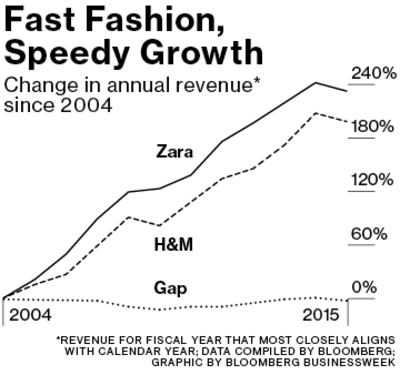
Over the last fifteen years, the retail industry has changed rapidly. Especially, the changes in the High street fashion industry. Zara has become the leader in the contemporary fashion industry by using two strategies including “fast fashion strategy” that uses information technology system, and “effective supply chain management” that included just-in-time and quick response system. Since the company has implemented these strategies the growth of Zara’s annual revenue has grown over 220% from 2004 to 2015. (Baker, 2016).
https://www.bloomberg.com/news/articles/2016-11-23/zara-s-recipe-for-success-more-data-fewer-bosses
During that time, Zara integrated strategies in all its process and use modern technology in the 21st century to produce their product.
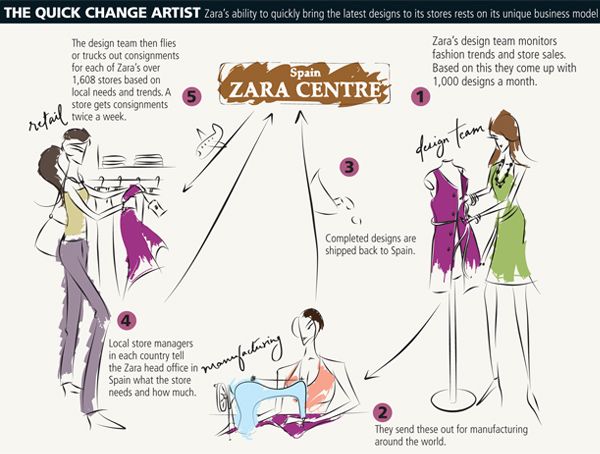
The first process is textile-finishing operations. Zara has its distribution center called “the cube” which is connected by underground tunnels with a high-speed monorail to move cut and dyeing fabrics, and assembly clothing items to each factory. Fabric supplies within 5 days, and the Design team create 1,000 designs a month and change their design every 2 weeks. The process of designing new products and having finished goods in the store within 3 weeks whereas competitors have to take 3-5 months for this process.
The next process is logistics and distribution, Zara can deliver to a worldwide store between 24-48 hours by trucks and air freight. The variety of clothes in a small quantity and on sale for a short time period (not more than 15 days) creates “sense of scarcity” – customer being aware that the item in the store will finish, therefore, choose and buy items immediately rather than waiting for a sale.
The last process is up-to-date demand management, this activity happens on a daily basis. After the customers leave, store manager from around the world will use wireless handsets to communicate with the designer team in Spain to inform them of the inventory level and update them on customer’s behavior, what is real time response of customer demands – which design, which colors, which is the popular themes. In this process, Zara operates the store’s inventory level as a just-in-time supply chain. The result of these strategies emphasise the marketing’ position of Zara which is the design leader.(Tidd, Bessant & Pavitt, 2013, p.3)
More than a decade, focus on main point : over 10 years large quality of useful data which was collected from a human via the communication channel between involving staff in different sections as well as the information was analysed to support decision making of Managing director who conducts the fast fashion strategy of Zara.
If fast fashion strategy and effective supply chain management are the opportunities which turn Zara into the leader of high-street fashion industry, the online trend which is unstoppable could become the challenge of this organization in the digitalization era.
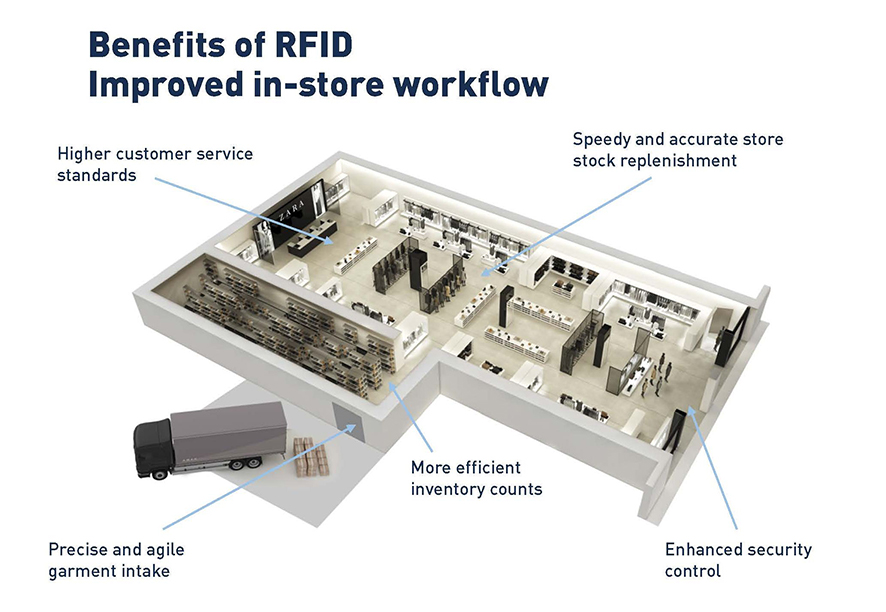
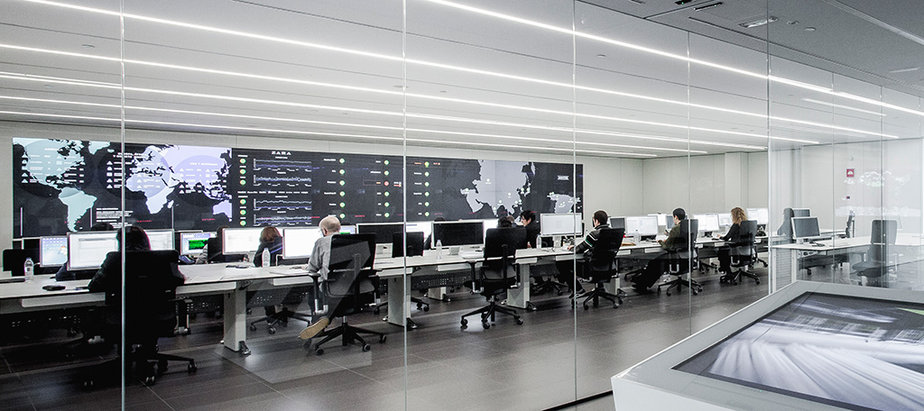
In 2016, six years later after the first online store has launched in August 2010 (Caesar, 2010), Zara focused on using big-data analysis to increase online sale volume by tagging every item of clothing with radiofrequency identification (RFID) (Inditex, annual report, 2016) microchip during the finishing process before product leaves from central warehouse. This technology equipment can provide real-time tracking of store inventory level and identify which item is purchased by the customer in each retail store. Therefore, the data about the sale in a stock keeping unit (SKU) in each store demonstrate the speed a top-selling product moves from the shelf to the customer. The point of sale (POS) is sent directly to Zara’s data processing center on a real-time basis. This center operates 24 hours a day, collects data from 2,251 retail stores across 96 markets and information is used by involve department such as design team, inventory management, logistics and distribution and customer service improvement to eliminate the risk of fashion and to minimize waste of product’s life cycle.
http://static.inditex.com/annual_report_2015/en/our-priorities/innovation-in-customer-services.php
As a result, the update real-time from each store has improved stock and inventory movement faster than in the past 80%. In addition, salespeople, designer, apply for benefit from SKU information to serve customer’s needs with fashion trends.
https://www.digitalistmag.com/digital-supply-networks/2016/03/30/zaras-agile-supply-chain-is-source-of-competitive-advantage-04083335
The success of fully integrating between sale channel network, physical and digital store inventory and mobile payment, the number of Zara’s online sales grew by 41% in 47 online markets via a global e-commerce platform.
Zara provides an in-store collection from online purchase in case of the customer do not have a credit card. Besides, the benefit of online and offline, which purchase from the integrated management is receipts of each purchase are saved automatically.
Future more, Zara has operated a new pop-up store format in Stratford, London which aim to improve shopping experience by select item in store and them order through Zara.com from the store.
References:
Baker. (2016). Zara’s Recipe for Success: More Data, Fewer Bosses. Retrieved February 8, 2019 from
https://www.bloomberg.com/news/articles/2016-11-23/zara-s-recipe-for-success-more-data-fewer-bosses
Caesar. (2010). Zara launches online retail store. Retrieved February 7, 2019 from
https://www.bbc.co.uk/news/business-11155437
Gorrepati. (2016). Zara’s Agile Supply Chain Is The Source Of Its Competitive Advantage. Retrieved February 8, 2019 from
Hansennov. (2012). How Zara Grew Into the World’s Largest Fashion Retailer. Retrieved February 5, 2019 from
Inditex. (2015). Annual Report. Retrieved February 5, 2019 from
http://static.inditex.com/annual_report_2015/en/our-priorities/innovation-in-customer-services.php
Inditex. (2017). Annual Report. Retrieved February 6, 2019 from
Jones. (2018). How Zara Took Over the World’s High Streets. Retrieved February 5, 2019 from
https://theculturetrip.com/europe/spain/articles/how-zara-took-over-the-worlds-high-streets/
 Travel with Gig
This is an interesting story of Zara. About the pop up store format you in London that you have mentioned, I think that is a very good idea to use a store as a showcase, but no stock. From your blog I can tell that Zara is doing well in term of stock management. But if they open store just for a showcase, it probably even easier for them to manage their stock and logistic (from factory to their distribution point). And now as we have smart phone, we can just scan the barcode to find the item we want to buy on the website! I do that or the time because sometimes when I’m at the store and I can’t find the size of the cloth I want I would just open Zara app or go on website then scan the barcode from tag to find it online. t is quite convenience!
LikeLiked by 1 person
Hi guy, thank you for your beautiful comment.
I agree with you that Zara is doing well in term of inventory management.
As a result of fast fashion which made Zara become the leader, however, the cost per item of their production is higher than other competitors like H&M or GAP. This is because the truck and air freight are the main transportation of Zara to distribute their product. Meanwhile, most of the competitor deliver their product by ship which safe their cost of transportation than Zara.
I think this one can be another challenge for Zara in the online market.
LikeLike
Hi Gig,
First of all, I am a big fan of Zara!!
Thank you so much for such an interesting blog on how Zara manage between the physical and digital world. It is also remarkable to know how Zara manage to go from the designing to actual product in just 3 weeks.
As a fan, I always enjoy the up-to-date fashion style that Zara having. Under the “fast fashion strategy”, I am so curious to know how Zara manage its own quality control over its product. I have once received a faulty product that from them through online shopping. For me, Zara definitely is a not cheap clothing brand and I have mid expectation on the quality.
I suppose the quality control and online service are both challenging for them. Still, the product itself sure is not enough to catch our attention. The whole store and online shopping experience is the reason I love Zara.
LikeLiked by 1 person
Hi Gig,
First of all, I am a big fan of Zara!!
Thank you so much for such an interesting blog on how Zara manage between the physical and digital world. It is also remarkable to know how Zara manages to go from design to the actual product in just 3 weeks.
As a fan, I always enjoy the up-to-date fashion style that Zara having. Under the “fast fashion strategy”, I am so curious to know how Zara manage its own quality control over its product. I have once received a faulty product from them through online shopping. For me, Zara definitely is a not cheap clothing brand and I have a mid expectation on the quality.
I suppose the quality control and online service are both challenging for them. Still, the product itself sure is not enough to catch our attention. The whole store and online shopping experience is the reason I love Zara.
LikeLiked by 1 person
Hi Gig, Thanks for your post. I also discussed Zara’s marketing strategy in my second blog. I agree with what you mentioned that Zara’s information management of its product inventory and reasonable analysis of user consumption data are two key factors to help it succeed in the fast retailing industry, which help them to predict and match products with customer preference as accurately as possible.
I also saw an article which mentioned that the new product inventory of Zara is limited, and the speed of its product update is faster than its competitors (Zara usually introduce its new products twice a week). Here is the link of that article: https://www.businessinsider.com/how-zara-is-changing-fashion-forever-2012-11?r=US&IR=T
I think this strategy keeps Zara’s products fresh for customers, which increases the frequency with which customers visit Zara stores and websites, and it is also one of the factors that contribute to Zara’s success.
Wenjiao Gong
LikeLiked by 1 person
Thank you Wenjiao Gong, I am very surprise to hear that you wrote Zara story for your blog post 2 too.
As you mention I do love Zara’ strategy to keep its product fresh for their customers.
LikeLike